
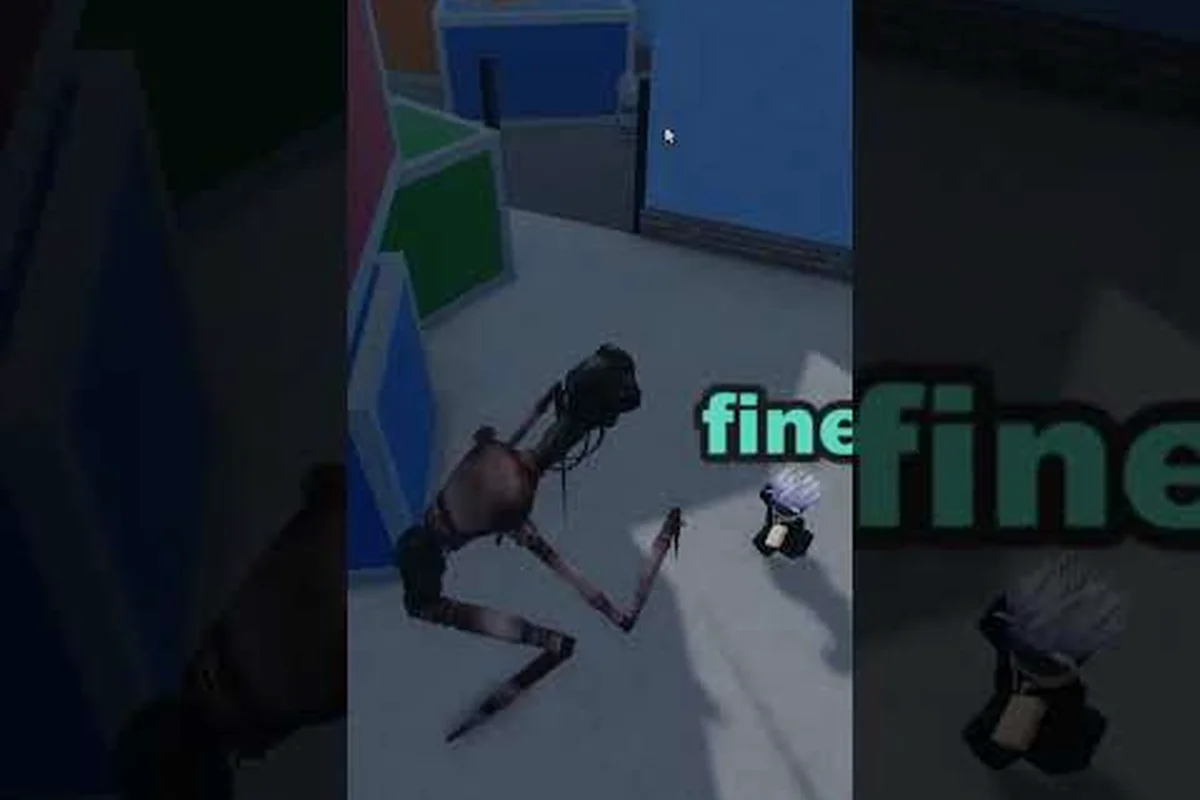
MM2 of The Locust drops you directly into a nightmare scenario: you've woken up inside the Locust's nest, and one player in every match has been transformed into the terrifying killer monster hunting you down. This Roblox horror survival experience puts the Murder Mystery 2 formula through a genuinely unsettling transformation where hiding means living and getting caught means game over. Understanding each role's strengths, weaknesses, and win conditions separates players who survive for thirty tense minutes from those who become the Locust's latest victim within the first sixty seconds.
Understanding the Core Role System
Every match of MM2 of The Locust begins with a role assignment that fundamentally determines your entire gameplay experience. The game uses a rotating system where one random player becomes the Locust killer while everyone else spawns as various survivor roles. This asymmetric design creates constant tension because you never know whether you'll be the hunter or the hunted when a new round begins. The role distribution changes each match, meaning strategies that worked in your previous game might need complete adjustment depending on what you become.
The MM2 of The Locust main character experience revolves around adapting to your assigned role within seconds of spawning. Survivors start scattered throughout the map in predefined locations, while the Locust receives a brief preparation period before the hunt officially begins. This setup creates dramatic asymmetry where the killer has information advantages while survivors must rely on teamwork and environmental awareness to survive. The pre-alpha status means the developers continue balancing these role dynamics, so staying current with patch notes becomes important for competitive play.
Role assignments are completely random within each match, though the game's internal systems appear to weight certain role distributions based on player count and server state. Players frequently ask MM2 of The Locust which role is best, but the honest answer depends entirely on your playstyle preferences and skill level. The Locust role offers dramatic power fantasy moments and the satisfaction of controlling terrifying encounters, while survivor roles provide tense stealth gameplay and the thrill of narrowly escaping death. Both sides offer genuine competitive experiences, though the learning curves differ significantly.
The Locust: Abilities and Hunting Strategy
| Statistic | Value |
|---|---|
| Total Visits | 26,323,797+ |
| Favorites | 70,873 |
| Active Players Online | ~36,600 |
| Max Server Size | 30 players |
| Developer Group Members | 24,106+ |
| Launch Date | 2026-07-27 |
| Last Patch Update | 2026-08-31 |
The Locust serves as the primary antagonist in MM2 of The Locust, embodying a nightmarish creature that stalks its prey through dark corridors and cramped spaces. When you spawn as the Locust, you gain access to a unique ability set designed around tracking, ambushing, and eliminating survivors before they can escape or complete objectives. Your visual appearance changes to reflect your killer status, instantly marking you as the threat everyone else must survive against. The Locust moves faster than standard survivors in most circumstances, giving you the tools to chase down targets who make noise or take visible paths.
Understanding what does Locust do requires recognizing both your offensive capabilities and your strategic objectives. The Locust must eliminate enough survivors to win the round, typically requiring you to catch and kill a significant percentage of the player population before time expires. Your abilities focus on three core pillars: detection through player activity, mobility for chase situations, and killing power once you've caught up to prey. The exact ability list evolves as the developers refine balance, but expect mechanics involving noise tracking, temporary speed boosts, and instant-kill options when catching survivors off-guard.
Key Locust abilities include:
-
Noise Detection: Automatically highlights survivors who run, jump, or interact with objects loudly, providing constant intel on player locations
-
Charge Rush: Temporarily increases movement speed to close distance on fleeing survivors, with cooldown management determining chase effectiveness
-
Ambush Strike: Allows setting up in specific map locations for surprise attacks on unsuspecting survivors passing through
-
Territory Control: Establishes temporary zones where the Locust gains additional bonuses, forcing survivors to navigate around dangerous areas
The Locust's main disadvantage comes from the survivor team's numbers advantage and their ability to cooperate through sharing information. Effective Locust play requires maximizing each elimination while minimizing time spent searching for your next target. Learning map layouts thoroughly gives you predictive advantages over survivors who might try common escape routes. Consider reviewing our MM2 of The Locust map list for detailed information about high-value hunting locations and survivor chokepoints where ambush strategies prove most effective.
Survivor Roles Explained
| Role Type | Count in Standard Lobby | Primary Win Condition |
|---|---|---|
| The Locust (Killer) | 1 | Eliminate all survivors |
| Innocent | 8–12 | Escape or survive to killer's defeat |
| Detective | 1–2 | Identify and report the killer |
| Survivor (Generic) | 15–27 | Hide, flee, or assist in killer's capture |
Every player who doesn't spawn as the Locust becomes a survivor, but the game distinguishes between several survivor sub-roles that affect gameplay objectives and win conditions. The primary distinction lies between innocent survivors who focus purely on evasion and escape, and special roles like detectives who gain investigative abilities that can identify threats. Understanding these role variations determines your tactical priorities throughout each match and shapes how you interact with other players.
The standard survivor role serves as the foundation of MM2 of The Locust, emphasizing stealth, map knowledge, and survival timing above all else. You begin each match with basic movement capabilities and must navigate the environment while avoiding the Locust's detection abilities. Your goal is simple but challenging: survive until the timer expires or until you find and activate an escape route. Survivors have no direct offensive capabilities, meaning your entire strategy revolves around positioning, hiding, and knowing when to run versus when to stay still. The victim's role in this game feels appropriately vulnerable, creating genuine tension every time you hear audio cues suggesting the Locust might be nearby.
Survivor role breakdown:
| Role Type | Primary Objective | Special Ability | Win Condition |
|---|---|---|---|
| Innocent | Survive and escape | None | Live until timer or escape |
| Detective | Identify threats | Track killer location | Survive while gathering intel |
| Support | Assist other survivors | Share resources/items | Team survival victory |
The victim role appears as the default state for most players in most matches, placing you in a constant state of vulnerability against the Locust's hunting abilities. You cannot fight back, cannot heal other players, and cannot directly contribute to eliminating the threat hunting you. This apparent disadvantage actually creates some of the most intense gameplay moments in Roblox, where every footstep and every decision carries life-or-death weight. Mastering survivor play means internalizing map layouts, learning the Locust's audio and visual cues, and developing the patience to remain hidden even when you desperately want to move and explore.
Detective Role: Gathering Information
The detective role represents one of the most strategically valuable survivor positions in MM2 of The Locust, granting abilities that fundamentally change how information flows through the survivor team. When you spawn as a detective, you gain access to tracking tools that reveal the Locust's approximate location or highlight survivors who have been recently eliminated. This information advantage makes detectives priority targets for the Locust, but it also makes them incredibly valuable assets for team survival. Understanding when to share your intel and when to stay hidden determines your effectiveness in this role.
Playing detective effectively requires balancing information gathering against survival risk. Your tracking abilities typically involve cooldowns or limited uses per match, meaning you cannot constantly monitor the Locust's position throughout the entire game. Strategic detective play involves saving ability uses for critical moments: confirming whether the Locust is heading toward a group of hiding survivors, checking escape route safety before committing to a dangerous path, or verifying survivor count when the remaining player count drops suspiciously. The information you gather can save multiple lives if shared appropriately, but sharing requires exposing your position temporarily through voice or text communication.
The MM2 of The Locust role list doesn't end with these four major categories, as cosmetic customization and potential future role additions expand the character experience significantly. Players can customize their survivor appearance using skins and outfits acquired through gameplay or potential real-money purchases. These cosmetics affect only visual presentation, never gameplay statistics, ensuring competitive fairness regardless of how much money you've invested in your character's appearance. The cosmetic system provides progression goals beyond pure survival, giving players reasons to continue playing even after mastering basic mechanics. Your MM2 of The Locust best survivor build will focus heavily on cosmetics and playstyle expression once you've secured basic survival competence.
Item and Equipment Systems
Beyond your core role abilities, MM2 of The Locust incorporates various items and equipment pieces that modify your effectiveness in specific situations. These tools range from passive buffs that improve your base stats to consumable items that provide temporary advantages during critical moments. Understanding what items exist and when to use them separates intermediate survivors from truly dangerous survivors who can evade even competent Locust players. The item system adds layer of resource management to the otherwise pure stealth and chase gameplay.
Items in MM2 of The Locust appear throughout the map in predefined spawn locations, though exact item distributions change between maps and server states. Finding items requires searching containers, corners, and less-traveled areas of each environment, creating risk-reward decisions about whether exploration is worth the potential Locust encounters. High-value items typically spawn in dangerous locations that the Locust might patrol, meaning greed often leads to death when players push too far into risky territory searching for better equipment. Conservative players might carry basic items throughout an entire match, while aggressive players might risk everything hunting for game-changing equipment that dramatically shifts survival odds.
Common item categories include:
-
Movement Items: Temporary speed boosts, jump enhancers, and dash abilities that improve your escape potential
-
Stealth Items: Noise reducers, camouflage effects, and distraction tools that help avoid detection
-
Survival Items: Health restoration, trap detection, and emergency escape mechanisms
-
Support Items: Communication tools, marker placements, and ally buffing equipment
Item quality varies significantly, with the game's tier list system categorizing equipment from common utility items to rare game-changers. Our MM2 of The Locust A tier items guide provides detailed rankings of which equipment pieces offer the best value for survival investment. The strongest items can turn nearly hopeless situations into successful escapes, but relying too heavily on equipment rather than fundamental skills creates fragile playstyles that fail when items don't spawn or get lost early. The most effective survivors combine solid mechanical fundamentals with strategic item usage, never sacrificing core survival instincts for temporary advantages.
Map Knowledge and Escape Routes
Survival in MM2 of The Locust depends heavily on understanding the environments where matches take place, with map knowledge often mattering more than reflexes or item quality. Each map features unique layouts, hiding spots, and escape routes that survivors must memorize to make informed decisions during tense gameplay moments. The Locust typically enjoys superior knowledge of common survivor paths and popular hiding locations, meaning blind movement typically results in predictable encounters that the killer can easily capitalize upon.
Escape routes represent the primary win condition for survivor players, representing points on each map where reaching them triggers victory and match completion. These escape points typically require reaching specific locations, interacting with escape mechanisms, and surviving a brief activation period that makes you vulnerable to pursuit. The MM2 of The Locust map list features several distinct environments with different escape route designs, requiring you to learn multiple maps rather than specializing in a single environment. Some maps feature multiple escape points, creating decision points about which route offers the best survival probability given current Locust position and remaining survivor count.
Mastering maps involves learning both obvious escape routes and hidden alternatives that the Locust might overlook during active hunts. Experienced survivors develop mental maps of each environment, noting safe paths between hiding spots, timing patterns for common Locust patrols, and environmental features that can be used for quick retreats or surprise counter-routes. The pre-alpha development status means maps continue receiving updates and improvements, so checking official patch notes helps maintain current map knowledge. Combining strong map understanding with role-appropriate play creates the foundation for consistent survival across different match configurations and Locust player skill levels.
Role Selection: Which Should You Play?
Determining which role offers the best experience in MM2 of The Locust depends heavily on your personal preferences, playstyle strengths, and what you find most enjoyable about multiplayer horror games. Some players thrive under pressure as the Locust, enjoying the power fantasy of controlling a terrifying hunter and executing strategic plays against coordinated survivor teams. Other players prefer the underdog tension of survivor gameplay, where every successful escape feels earned through skill, patience, and smart decision-making. The game supports both preferences equally, meaning there's no objectively correct choice for most players.
New players often benefit from starting with survivor roles to learn maps, mechanics, and the Locust's behavior patterns before attempting killer gameplay. Understanding survivor psychology helps Locust players predict movement patterns and exploit common mistakes that new survivors make consistently. Once you've survived several matches and observed different Locust strategies in action, attempting the killer role lets you apply that knowledge directly while experiencing the game from the opposite perspective. This cyclical learning process improves both your survivor and killer play simultaneously, creating a positive skill development loop that makes each match more educational than the last.
Players interested in competitive play should consider how different roles contribute to overall match dynamics and win conditions. The MM2 of The Locust strongest powers tier list covers which abilities and equipment combinations offer the greatest competitive advantages across different roles. Competitive play typically rewards deep mechanical mastery over broad role experimentation, meaning dedicating time to mastering one role often produces better results than spreading effort across multiple roles equally. Eventually, most dedicated players develop preferences for specific roles while maintaining competency across all options to adapt to whatever the random role assignment system provides each match.
Frequently Asked Questions
How do you spawn as the Locust in MM2 of The Locust?
Role assignment happens completely randomly at the start of each match, with no way to guarantee you'll become the Locust. The game selects one player to become the killer while everyone else receives survivor roles. Playing more matches increases your overall experience, which might indirectly influence your understanding of Locust behavior, but random selection means anyone can become the killer in any given round.
What does the Locust do to survivors who get caught?
When the Locust catches a survivor, that player is eliminated from the current match and becomes a spectator until the next round begins. Elimination means you cannot interact with the environment, use items, or contribute to escape attempts. The Locust's catching mechanics involve direct contact in most cases, though specific abilities might allow alternative elimination methods depending on the current game version.
Can you play with friends in MM2 of The Locust?
Yes, you can invite friends to your Roblox party and join the same server together. However, role assignment remains random regardless of party status, meaning you might end up on opposite sides of the match. Playing with friends offers communication advantages for survivors trying to coordinate escapes and share information about the Locust's location throughout the match.
What is the best role for new players to start with?
The innocent survivor role provides the best introduction for new players because it emphasizes core survival skills without complicating gameplay with special abilities. Learning to hide, move safely between locations, and understand Locust detection mechanics forms the foundation for all other roles. Once you've survived several matches and understand basic gameplay flow, experimenting with detective or other roles becomes more productive since you already understand the survival fundamentals those roles build upon.
How many players can play MM2 of The Locust at once?
Each server accommodates a maximum of 30 players simultaneously, with one randomly selected player becoming the Locust killer and the remaining 29 players serving as survivors. The game maintains active player populations around 36,600 concurrent players across all servers, according to available statistics. This player base ensures relatively quick match queue times regardless of when you decide to play.