
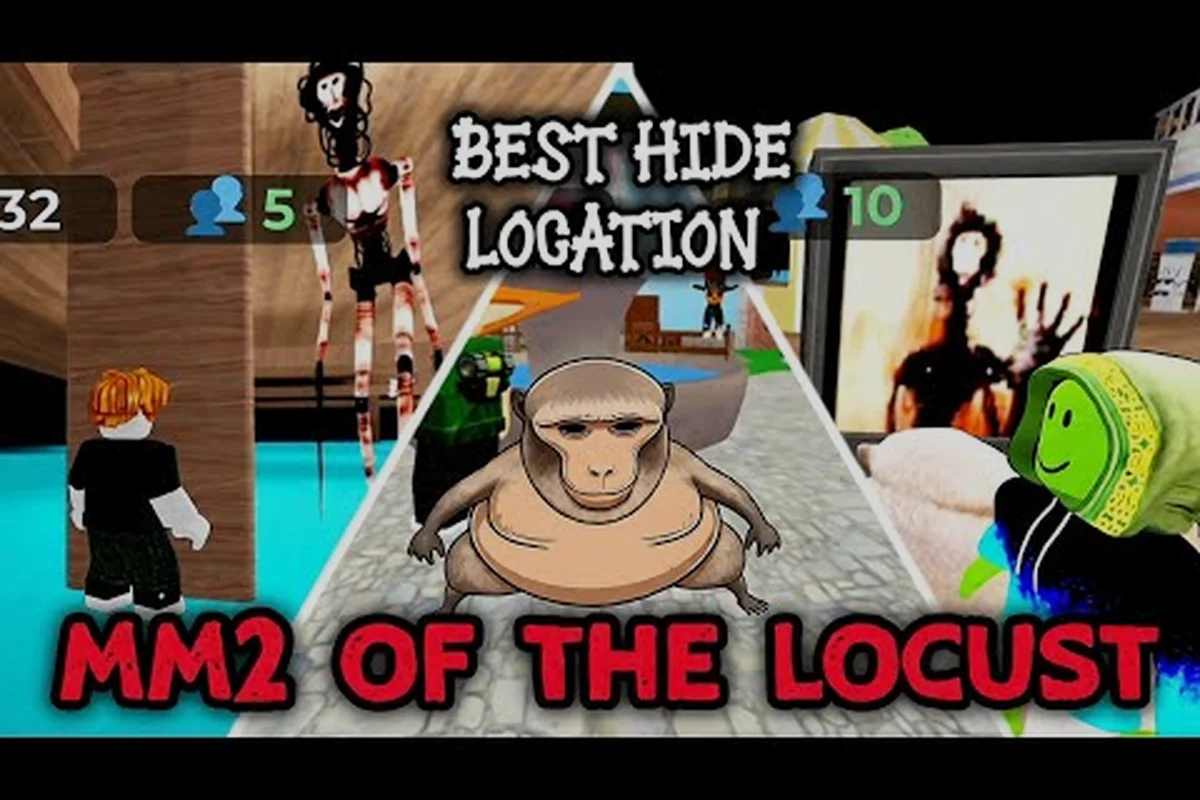
Every round of MM2 of The Locust begins the same way: you load into darkness, hear the distant hum of the hive, and then the vote prompt appears. Your choice in that moment determines which corridors you crawl through, which hiding spots open up, and whether the Locust spawns twenty feet away or across the entire nest. Understanding how map voting and random selection work in this Roblox horror survival game is the difference between walking into a manageable challenge and being hunted before you can find your footing. The stakes are immediate, the decisions are yours, and learning the system's underlying mechanics gives you a genuine edge over players who vote blindly. The stakes are immediate, the decisions are yours, and learning the system's underlying mechanics gives you a genuine edge over players who vote blindly—especially when you account for how nest areas shape the flow of combat. especially when you account for how nest areas shape the flow of combat—understanding these strategic locations and their impact on unit positioning gives you a decisive tactical advantage over opponents who overlook their influence.
How the Map Voting System Works in MM2 of The Locust
When a new round starts in MM2 of The Locust, all players in the server are presented with a voting interface before gameplay begins. This interface displays the available maps that the current session can cycle through, and every connected player gets one vote. The majority vote determines which map loads for that round, creating a democratic process that keeps gameplay fresh and prevents any single environment from feeling stale after repeated matches.
The voting window is time-limited, which means you do not have unlimited seconds to deliberate. Once the timer expires, the map with the most votes is selected and the round begins immediately. If there is a tie between two maps, the game appears to select one at random from the tied options, meaning your vote genuinely matters in close races. This design rewards players who pay attention to the current map pool and form quick opinions about which environment suits their preferred playstyle for that session.
It is worth noting that the voting screen also displays basic information about each map option, such as its name and sometimes a preview thumbnail. Players who recognize map names from previous rounds can make faster, more informed decisions, while newcomers may need a moment to process which environment they are about to enter. The community has reported that the voting UI is straightforward and accessible, though it can feel rushed during high-intensity sessions when the round timer feels aggressive.
When the Game Picks the Map for You
Not every player in a given session wants to vote, and not every server has enough players to form a decisive majority. For these situations, MM2 of The Locust includes a random map selection option that players can choose instead of casting a specific vote. When this mode is active, the game itself picks from the available map pool using an internal randomization algorithm, removing human bias from the equation entirely and introducing an element of surprise that fits the horror atmosphere perfectly.
The random map feature is particularly useful in smaller lobbies where only a handful of players are online. Since the game caps at 30 players per server according to the Roblox Games API, smaller sessions are common and often lack the voter turnout needed for a meaningful democratic selection. By selecting the random option, you effectively let the game surprise you and your fellow survivors with whichever map the algorithm selects, whether that is a familiar location you have mastered or an entirely new layout you have never encountered before.
From a strategic standpoint, choosing the random map option can actually be a psychological advantage. If the Locust player knows that a specific map favors survivors due to its layout or number of hiding spots, they might vote for that map to make their hunt easier. By opting into randomness, you eliminate the possibility of the killer manipulating the vote in their favor, and you introduce unpredictability that benefits the survival side of the game. Experienced players often alternate between strategic voting and random selection to keep their opponents guessing about their preferences.
The Locust Nest Map: Exploring the Main Hive Location
The flagship map in MM2 of The Locust is The Locust's Nest, and it serves as the primary arena where most rounds take place. This environment is described by community players as a dark maze of corridors, rooms, and hiding spots, designed to evoke the feeling of being trapped inside a living organism. The architecture shifts between tight crawlspaces and open chambers, giving the Locust plenty of approach angles while providing survivors with options for evasion and concealment.
Understanding the layout of The Locust's Nest is essential for players who want to excel in MM2 of The Locust regardless of their role. The hive location consists of multiple interconnected zones, each with distinct characteristics that influence how combat and stealth play out during a round. Spawn points and exit locations are distributed across the map, meaning that two rounds on the same environment can feel dramatically different depending on where the game initially places the survivors and the Locust. Players who study the nest's geography learn which corridors bottleneck, which rooms have multiple exits, and which hiding spots provide the best sightlines for monitoring approaching threats.
The nest map has received attention from the developer, THE STALKERS OG, with confirmed upcoming map updates including new environments and equipment powers in future pre-alpha releases. Current players have catalogued the existing nest layout through community reports, sharing knowledge about secret passages, high-risk shortcuts, and optimal routes between the hive location's major landmarks. This collective map knowledge grows with every session, and players who contribute their discoveries help the entire player base improve their survival rates and hunting efficiency.
MM2 of The Locust Locations: Spawn Points and Exit Zones
Every map in MM2 of The Locust has designated spawn points that determine where survivors appear at the start of each round. These locations are not random within a given map; they follow a predefined pattern that the game cycles through to keep gameplay from becoming predictable. Understanding where you are likely to spawn based on the current map rotation gives you a head start on forming your escape plan before the timer even begins.
Exit locations represent the most critical objective for survivors in MM2 of The Locust. These are the designated zones where players must reach to successfully escape the Locust's nest and secure victory for the survival side. Exit locations are typically spread across the map to prevent a single dominant strategy, and the distance between spawn points and exits varies significantly depending on which map is selected for the round. Some rounds place survivors close to an exit, creating a frantic sprint, while others drop them deep within the hive location where they must navigate the entire environment to find safety.
The relationship between spawn points and exit locations creates a layered strategic challenge that experienced players learn to read within seconds of loading into a new round. By quickly assessing the distance to the nearest exit and the layout of intervening obstacles, you can decide whether to make a direct run or take a more cautious approach through less obvious routes. The Locust player faces a complementary decision, choosing whether to intercept known escape corridors or patrol the deeper sections of the map where survivors are more likely to hide.
Strategic Voting: Choosing Maps That Favor Your Playstyle
If you want to elevate your MM2 of The Locust gameplay, treating map voting as a strategic decision rather than a casual habit is one of the simplest ways to gain an advantage. Different maps in the rotation offer different strategic environments, and aligning your vote with your preferred role—whether you are a survivor who excels at hiding or a Locust player who thrives on aggressive hunting—can meaningfully shift the odds in your favor across multiple rounds.
Survivors who prefer stealth and extended gameplay sessions tend to favor maps with dense interior layouts, multiple rooms, and numerous hiding spots that allow them to evade the Locust for longer periods. Voting for maps with complex corridors and limited sightlines creates environments where patience and careful movement pay dividends, giving survivors more opportunities to outlast the Locust or reach exit locations through indirect routes. Conversely, survivors who prefer fast-paced rounds may vote for maps with shorter distances between spawn points and exits, betting on quick escapes rather than extended cat-and-mouse gameplay.
Locust players approaching the vote from the opposite perspective should look for maps that reduce the number of effective hiding spots or create more open spaces where survivors have fewer options for concealment. The Locust's Nest at its core is designed to be a predator's domain, but certain map configurations make the hunt easier than others by limiting the survivor's ability to disappear into tight spaces. By voting strategically, the Locust player can set the stage for a hunt that plays to their strengths before the round even begins, and this pre-round advantage often proves decisive in close matches.
Map Rotation and the Future of MM2 of The Locust Maps
The current map pool in MM2 of The Locust is relatively focused, with The Locust's Nest serving as the central hub environment that most players experience during their sessions. However, the developer has confirmed that map rotation will expand in upcoming pre-alpha updates, introducing new maps alongside equipment powers that will add variety to both survival and hunting gameplay. Players tracking the game's development through THE STALKERS OG's announcements and community channels have noted that the roadmap suggests meaningful additions to the map roster in the near term.
A rotating map system adds long-term replayability to MM2 of The Locust by ensuring that no single environment becomes overly familiar or predictable. As new maps are introduced, the voting system will grow in importance because players will need to learn each new environment's geometry, hiding spots, and exit configurations. The community has already begun speculating about what future maps might look like based on the game's horror survival theme, with players anticipating expansions to the hive location, entirely new settings outside the nest, and variations that introduce environmental hazards alongside the Locust's hunting capabilities.
For now, players who master the current map rotation, understand the voting mechanics, and learn the strategic nuances of The Locust's Nest will be best positioned to adapt when new maps enter the pool. The skills you develop by studying the existing environment—spatial awareness, route planning, and the ability to read spawn-to-exit distances quickly—transfer directly to any future additions, giving you a head start on competitors who wait until new maps are released to start learning their layouts.
| Map Element | Description | Strategic Impact |
|---|---|---|
| The Locust's Nest | Dark maze of corridors, rooms, and hiding spots | High stealth potential for survivors |
| Hive Location | Core area of the nest map | Central hub for spawn and patrol routes |
| Spawn Points | Predefined survivor entry locations | Varies per round, affects initial route planning |
| Exit Locations | Designated escape zones for survivors | Distance from spawn determines round pace |
| Random Selection | Game-picked map from available pool | Unpredictable, benefits survivors seeking variety |
| Voting Strategy | Best For | Example Scenario |
|---|---|---|
| Strategic Voting | Experienced players with map knowledge | Voting for dense-corridor maps when playing survivor |
| Random Map Selection | Smaller lobbies, surprise gameplay | 8-player server where majority is hard to form |
| Anti-Manipulation Voting | Suspecting Locust of vote manipulation | Opting for random when Locust player votes predictably |
| Role-Based Voting | Players who switch between survivor and Locust | Voting open-area maps when playing as the Locust |
| Community Consensus | Following experienced server members | Letting knowledgeable players guide the vote |
| Map Feature | Survivor Advantage | Locust Advantage |
|---|---|---|
| Tight Corridors | Easier to hide, more cover | Can anticipate movement paths |
| Open Chambers | Harder to conceal | Better sightlines, longer detection range |
| Multiple Exits | More escape routes, flexibility | Must cover more ground, spread thin |
| Single Exit | Forces commitment to one route | Easier to guard and intercept |
| Secret Passages | Alternate routes, surprise escapes | Can learn and patrol these areas |
Key Differences Between MM2 of The Locust Maps and Map Selection Modes
While MM2 of The Locust currently features a limited map pool centered on The Locust's Nest, the distinction between voting and random selection creates two fundamentally different gameplay experiences even within the same environment. Voting tends to produce more consistent rounds where experienced players guide the server toward environments they recognize, while random selection introduces chaos and surprise that can either favor or punish different player types depending on how the randomization lands.
The psychological dimension of voting versus random selection also affects player behavior during the round itself. When players vote for a specific map, they enter the round with certain expectations about the environment, which shapes their strategy from the first second. When players opt for random selection, they step into the unknown, and this uncertainty often leads to more cautious early-game play as survivors assess their surroundings before committing to an escape plan. The Locust player benefits differently in each scenario, with voted maps often creating setups where the killer can plan their initial patrol route, while random maps may catch them off guard alongside the survivors.
Understanding these differences allows you to make informed decisions about when to vote strategically and when to embrace randomness for the sake of variety and unpredictability. Both approaches have merit, and skilled players learn to adapt their in-game tactics based on which selection method produced the current map. The interplay between voting strategy, map knowledge, and in-round adaptability is what makes MM2 of The Locust's map system a core part of the overall experience rather than a simple pre-game formality.
How MM2 of The Locust Locations Shape Every Round's Difficulty
The specific arrangement of MM2 of The Locust locations within each map has a direct, measurable impact on how difficult a round feels for both sides. Spawn points that place survivors near exit locations create high-tension sprints where the Locust must react quickly or lose their prey. Spawn points deep within the hive location demand longer survival times and more sophisticated evasion tactics, turning each round into a extended cat-and-mouse session that tests the survivor's spatial memory and decision-making under pressure.
Exit location design follows a similar principle, with maps that place multiple exits within reasonable distance of each other offering survivors more strategic choices. A survivor who recognizes that the nearest exit is heavily patrolled can pivot toward an alternative exit location, but only if they have enough map knowledge to know where that alternative lies and how to reach it without drawing the Locust's attention. This creates a knowledge gap between players who have studied the environment and those who enter each round with minimal preparation, and that gap translates directly into survival rate differences across the player base.
The hive location's verticality and room complexity also influence difficulty in ways that are not immediately obvious. Corridors with multiple elevation changes force survivors to think in three dimensions, considering not just horizontal routes but also vertical escapes through platforms and elevated passages. The Locust player must adapt to these spatial complexities as well, learning to predict which routes survivors favor and positioning themselves at chokepoints where three-dimensional movement funnels into a single corridor. Mastering these location-based dynamics is what separates competent players from true masters of MM2 of The Locust.
Frequently Asked Questions
How does map voting affect spawn points in MM2 of The Locust?
The map you vote for determines the overall layout of spawn points and exit locations for that round. Within a given map, the game cycles through predefined spawn configurations, but the map itself sets the boundaries and distances that govern where survivors appear relative to exits. Voting for a specific map gives you indirect control over the general geography of the round, even if you cannot pinpoint your exact spawn position.
Can the Locust player manipulate the map vote?
Theoretically yes, because the Locust player is just another participant in the voting system and gets one vote like everyone else. However, opting for random map selection removes this possibility entirely and introduces unpredictability that benefits the survivor side. If you suspect manipulation in a round, choosing the random option is a practical countermeasure that the community has recommended.
What is the difference between random selection and voting in MM2 of The Locust?
Voting lets players choose a specific map from the available pool based on their preferences and strategy, while random selection delegates the choice to the game's algorithm. Random selection is especially useful in smaller servers where not enough players are online to form a meaningful majority, and it creates a surprise element that adds variety to repeated sessions on the same maps.
Are more maps coming to MM2 of The Locust?
Yes. THE STALKERS OG, the developer behind the game, has confirmed upcoming maps and equipment powers in the next pre-alpha update according to community announcements. The current map pool is expected to expand, which will make the voting system increasingly important as players navigate a larger and more diverse selection of environments within the Locust's hive location.
Why is The Locust's Nest the primary map in MM2 of The Locust?
The Locust's Nest serves as the core environment designed specifically for the game's horror survival premise. Its dark maze layout, diverse hiding spots, and interconnected corridors create the ideal setting for predator-versus-prey gameplay. Community players have praised the nest for its atmospheric design, and it remains the most-played map in the current rotation.