
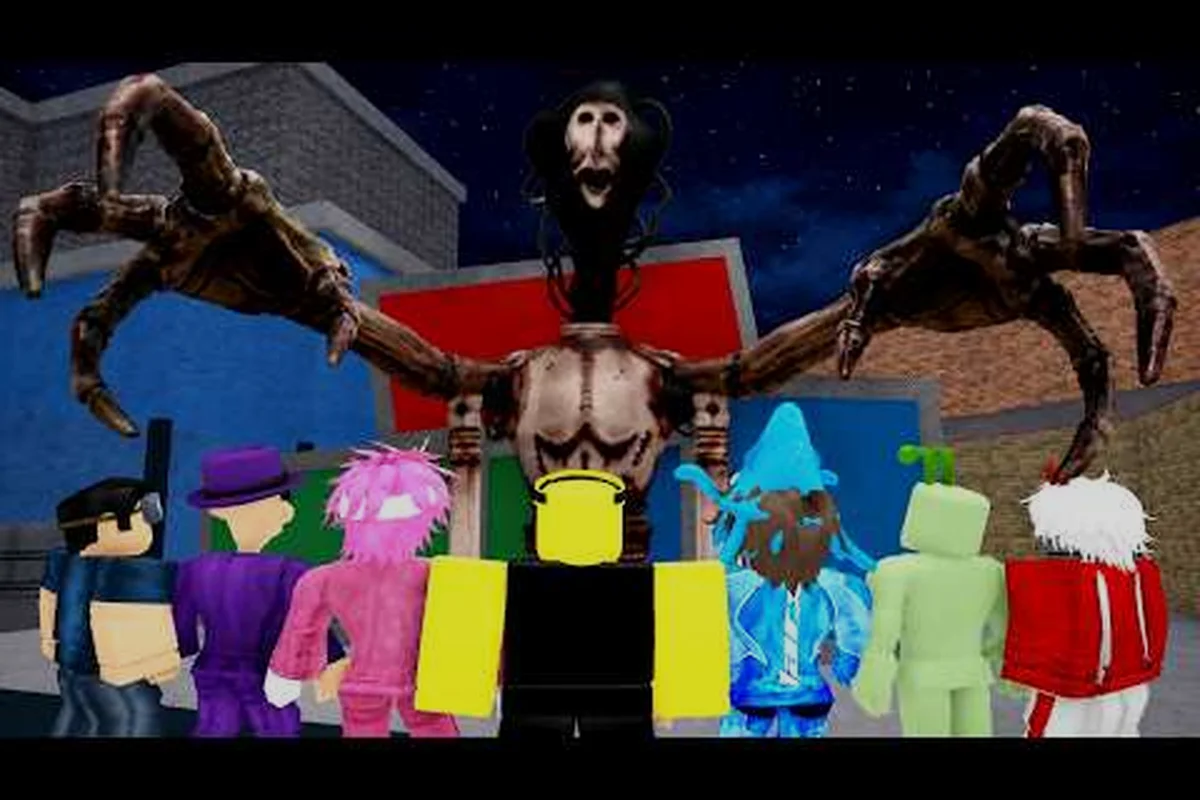
In MM2 of The Locust, every player who enters the nest becomes either a hunted survivor or the predator itself. The Roblox horror survival experience by THE STALKERS OG drops players into an impossible situation: trapped inside the dwelling of something ancient and relentless, with no memory of how they arrived and only one goal—escape before the Locust finds them. Understanding the MM2 of The Locust protagonist and survivor characters reveals why this game has captured over 26 million visits since its July 2026 launch. The tension between anonymity and terror defines every round, making each survivor's story both personal and universal. The tension between anonymity and terror defines every round, making each survivor's story both personal and universal—a design philosophy that extends to the subtle easter eggs hidden throughout the game's unsettling world.
The Locust's damage scales based on the number of active enemies on the field, dealing increased damage per target as outlined in the MM2 of The Locust game page on Roblox.
The Dual-Role System: Hunter and Hunted
The MM2 of The Locust introduces a revolutionary dual-role mechanic that forms the psychological core of the entire experience. At the start of each match, the game randomly selects one player to become The Locust—the nightmare incarnate that stalks the corridors of its own nest. This selected player transforms into something no longer human, gaining enhanced speed, terrifying detection abilities, and the power to instantly eliminate any survivor who crosses their path. Meanwhile, every other player in the server assumes the role of a trapped survivor, armed only with their wits, their ability to move silently, and the desperate hope that they can find an exit before becoming the next victim.
The survivor experience in MM2 of The Locust represents a masterclass in asymmetrical horror design. Survivors lack any meaningful offensive capability; they cannot fight back against The Locust, they cannot barricade doors permanently, and they cannot resurrect once eliminated. What they do possess is mobility, stealth, and the collective knowledge of the map that comes from repeated plays. Each survivor must learn the architecture of the nest, memorize hiding spots that provide momentary safety, and understand the audio cues that signal The Locust's approach from around a corner or through a wall. The absence of combat agency transforms survival into something closer to a puzzle than a battle—finding the right path, making the right choices, and occasionally relying on luck when The Locust searches in the wrong direction.
Survivor Class Characteristics
Survivors in MM2 of The Locust share identical baseline capabilities, though player skill creates enormous variation in effectiveness. Every survivor can run at the same speed, crouch to reduce their visibility and noise footprint, and interact with certain environmental elements scattered throughout the nest. The homogeneity of survivor abilities means that matches are decided by decision-making rather than power progression—no survivor can become stronger through gameplay within a single round, which preserves the intense balance that makes every encounter feel genuinely dangerous. The Locust grows no weaker as survivors escape, and escaped survivors cannot return to help those still trapped inside.
| Role | Primary Objective | Abilities | Elimination Condition |
|---|---|---|---|
| The Locust | Eliminate all survivors | Enhanced speed, detection, instant elimination | None within match |
| Survivor | Escape the nest | Movement, stealth, environmental interaction | Contact with The Locust |
The Locust: Beyond a Simple Antagonist
The Locust monster lore extends far beyond what players initially perceive during their first terrifying encounters. This entity is not merely a game mechanic dressed in horror aesthetics—it represents something deeper within the mythology that THE STALKERS OG has carefully constructed for their Roblox horror experience. The Locust serves as both predator and jailer, having built its nest from organic matter that seems to grow and shift around those trapped within. Players who study the environment closely have noticed that the architecture appears to respond to the presence of survivors, with pathways sometimes opening where walls existed moments before and dead ends appearing where passages once existed.
The MM2 of The Locust nightmare element derives its power from the entity's apparent omniscience within its nest. Unlike traditional horror games where the monster patrols fixed routes or responds to obvious stimuli, The Locust seems to possess an almost supernatural awareness of survivor locations. This creates a persistent sense of paranoia that makes even apparently safe hiding spots feel temporary and uncertain. Community discussions on the game's official Roblox page have generated numerous theories attempting to explain this phenomenon—whether The Locust can sense heartbeat rhythms, detect the rustling of nervous breathing, or simply knows every inch of its domain with predatory familiarity. The ambiguity serves the horror perfectly, leaving players never quite certain whether they've truly escaped detection or simply failed to notice the signs.
The Locust's Visual Design and Terrifying Presence
The visual representation of The Locust draws inspiration from multiple horror traditions while maintaining a distinctive identity that sets it apart from other Roblox horror creations. The design incorporates elongated limbs that enable surprising bursts of speed, organic textures that suggest both insectoid and mammalian qualities, and a face—or absence of face—that communicates nothing yet somehow expresses infinite malevolence. Players who have studied The Locust reference materials note the careful attention to silhouette readability, ensuring that The Locust remains distinct even in cluttered environments where survivors might otherwise mistake it for part of the scenery.
The creature's audio design deserves equal recognition in understanding its effectiveness as a horror antagonist. The Locust produces sounds that blur the line between biological and mechanical, with clicking, scraping, and wet movements that create an instinctive revulsion in listeners. These audio cues serve dual purposes—they provide survivors with information about The Locust's location while simultaneously cultivating an atmosphere of dread that persists even when the creature is nowhere nearby. Many players report that the sound design alone has become a source of anxiety, with certain audio sequences triggering immediate fear responses even in unrelated contexts.
Why Survivors Enter the Nest: The Lore Mystery
The question of why survivors find themselves trapped in The Locust's nest represents one of the central mysteries driving community engagement with the game's mythology. The official Roblox description hints at a scenario where players "find themselves" in the nest with no explanation for their arrival, which has spawned extensive speculation about the nature of the curse, ritual, or cosmic accident that brought them there. Some community theories suggest that survivors are themselves connected to The Locust in ways they don't understand—descendants of those who wronged it, or perhaps fragments of something that The Locust itself once was before the transformation that created the monster.
The absence of backstory within the game itself has not prevented the development of rich narrative interpretations among the player community. The MM2 of The Locust inspiration appears to draw from survival horror traditions established by franchises like Silent Hill and Fatal Frame, where the protagonists often find themselves trapped in nightmares they don't understand through circumstances beyond their control. This deliberate ambiguity serves multiple purposes—it removes the need for extensive exposition that might interrupt gameplay flow, it creates space for community storytelling and headcanon development, and it preserves a sense of cosmic horror where understanding the enemy's motivation might be worse than remaining ignorant.
Theories on Survivor Origins
Speculation about survivor origins divides roughly into several schools of thought that reflect different horror subgenre preferences. The "cursed visitor" theory suggests that The Locust's nest exists at a crossroads between worlds, accidentally drawing in whoever happens to pass too close during moments of vulnerability. The "chosen sacrifice" interpretation posits a darker purpose—that something deliberately selects certain individuals for delivery to The Locust, perhaps as tribute or as part of an ancient bargain whose terms have been forgotten. A third school of thought proposes a more psychological explanation, suggesting that the nest represents a shared nightmare space where minds connect through trauma, and The Locust serves as an externalized manifestation of collective survivor guilt.
| Theory | Core Premise | Supporting Evidence | Community Reception |
|---|---|---|---|
| Cursed Visitor | Nest exists at dimensional crossroads | "Found yourself in the nest" description | Popular, widely discussed |
| Chosen Sacrifice | Something deliberately delivers victims | Selection mechanics, no escape until game ends | Popular in dark horror circles |
| Psychological Manifestation | Locust represents externalized trauma | Shared nightmare space, no memory of arrival | More academic, niche appeal |
| The Locust's Former Selves | Survivors are fragments of the monster | Locust's apparent omniscience, nest architecture | Less common, intriguing theory |
The Psychology of Survival: Facing Your Worst Nightmare
Playing MM2 of The Locust creates a unique psychological experience that differs fundamentally from other horror games in the Roblox ecosystem. The combination of anonymous multiplayer and asymmetric roles means that players cycle between positions of power and vulnerability, understanding both the hunter's predatory satisfaction and the hunted's desperate terror. This dual perspective cultivates empathy that single-player horror games often fail to achieve—survivors who have been ruthlessly stalked by a skilled Locust player approach their own hunts with a different understanding, while Locust players who have experienced the panic of being cornered may show unexpected mercy or employ more psychologically sophisticated tactics.
The MM2 of The Locust based on psychological horror principles emphasizes anticipation over action, tension over resolution. Matches can stretch for several minutes with no eliminations, during which time survivors experience a sustained state of low-grade terror punctuated by moments of acute panic when The Locust draws near. This pacing pattern reflects clinical understanding of fear response—the body maintains elevated cortisol levels during uncertain threat states, creating exhaustion that makes eventual encounters feel even more desperate. The game's design effectively weaponizes the gap between knowing danger exists and knowing where that danger lurks.
Tactical Decision-Making Under Pressure
Survivors in MM2 of The Locust face constant binary choices that reveal character under pressure. Should they risk moving to a better hiding spot or stay in their current location that may already be compromised? When they hear The Locust searching nearby, should they remain perfectly still or attempt to relocate during the momentary distraction? These decisions compress into seconds, with consequences that range from immediate death to eventual escape. The best survivors develop what might be called "threat intuition"—an accumulated sense for when The Locust is approaching based on environmental cues, timing patterns, and the subtle sounds that precede an encounter.
Locust players, conversely, must develop hunting instincts that translate into efficient search patterns and effective use of their detection abilities. The decision of where to search, when to pursue, and how to cover the maximum area with minimum time investment separates skilled Locusts from merely adequate ones. A truly effective Locust player learns to predict survivor behavior based on map layout, time elapsed, and the psychological tendency of hunted players to make increasingly desperate decisions as escape windows close.
Escape and Survival: What It Means to Win
Victory in MM2 of The Locust takes different forms depending on one's role, but the core satisfaction centers on outsmarting an opponent who possesses overwhelming advantages. For survivors, escape requires navigating the treacherous architecture of The Locust's nest while avoiding detection by a predator designed to hunt them specifically. The escape itself represents a triumph of stealth, patience, and situational awareness over raw power—a rare victory for the underdog that feels genuinely earned rather than handed out through mechanical advantage. Each successful escape reinforces the possibility that survival is possible, even when the odds seem insurmountable.
For The Locust, victory comes through the efficient completion of a hunt that should, by rights, be inevitable. A skilled Locust player finds satisfaction not merely in eliminations but in the manner of those eliminations—cornering a survivor who thought they had found safety, appearing suddenly where no approach seemed possible, or patiently waiting at an escape point where desperation leads survivors to abandon caution. The Locust's victories are those of a supreme predator confirming its dominance, and the psychological impact on eliminated survivors can be significant, creating memorable moments that fuel return visits and improve survivor skills through the pain of failure.
Match Statistics and Progression
Understanding match statistics helps frame the MM2 of The Locust experience within broader gaming patterns. With a maximum of 30 players per server and the typical distribution creating one Locust against 20-25 survivors, individual survivor survival rates should statistically approach 4-5% if The Locust operates with perfect efficiency. In practice, most matches see multiple survivors escape, suggesting that even skilled Locust players face challenges in covering all escape routes and detecting all hiding strategies. This balance preserves the viability of the survivor experience while ensuring that Locust players feel appropriately powerful within their domain.
| Match Element | Typical Values | Impact on Gameplay |
|---|---|---|
| Server Capacity | 30 players maximum | Creates intimate horror with identifiable opponents |
| Locust Count | 1 per match | Asymmetric design favors Locust but with counterplay |
| Survivor Count | 20-29 per match | Creates community tension and shared survival goals |
| Average Match Duration | 5-15 minutes | Sufficient time for tension building without tedium |
| Typical Survivor Escape Rate | 15-30% of survivors | Balanced difficulty encouraging repeat play |
The Community's Role in Shaping Character Narratives
The absence of explicit narrative in MM2 of The Locust has not prevented the development of rich storytelling traditions within the player community. Players share their most terrifying encounters, most clever escapes, and most unexpected Locust behaviors through social media, video content, and in-game chat. These shared experiences aggregate into a collective understanding of the game's possibilities that extends far beyond what any single player could discover alone. The MM2 of The Locust reference materials growing across the internet represent a grassroots mythology in formation—stories told, retold, embellished, and contested until the line between official game design and community creation becomes beautifully unclear.
Survivors in this emerging mythology often take on archetypes that reflect different play styles and psychological profiles. The "ghost" survivor who escapes without ever being seen by The Locust represents the pinnacle of stealth mastery, while the "sacrifice" who draws The Locust away from others through deliberate distraction embodies heroic selflessness. The Locust too develops character through community storytelling—the relentless hunter who never stops, the patient stalker who waits for hours, the playful predator who toys with prey before eliminating them. These characterizations transform mechanical roles into something approaching dramatic personae.
Cross-Lore Connections and Extended Universe
The relationship between MM2 of The Locust and other horror experiences in the broader Roblox ecosystem suggests potential for expanded mythology across multiple titles. THE STALKERS OG, the group behind this experience, has created other horror titles that may share thematic DNA or explicit continuity with The Locust's universe. Players who engage with multiple titles from the same creator often report finding subtle connections, shared design philosophies, and complementary horror approaches that enrich each individual experience. This interconnected approach to horror game development mirrors successful franchise strategies in the broader gaming industry.
The Lore Explained articles and community theories about The Locust's origins increasingly reference these potential connections, speculating about whether The Locust represents an apex predator in a larger horror ecology, a corrupted form of something that once protected rather than hunted, or simply one manifestation of nightmare logic that governs the entire fictional universe. These theories, whether or not they reflect developer intent, demonstrate the engagement that effective horror design can generate and suggest exciting possibilities for future expansion of The Locust mythology.
Frequently Asked Questions
Who is the main protagonist in MM2 of The Locust?
The game features no single protagonist—instead, every player becomes either the survivor protagonist fighting to escape The Locust's nest or the antagonist Locust hunting them down. The dual-role system means players experience both perspectives across different matches, creating a protagonist experience defined by survival rather than a single character.
Why do survivors end up trapped in The Locust's nest?
The game intentionally provides no explicit explanation, creating deliberate ambiguity that fuels community speculation. Theories range from dimensional accidents to sacrificial rituals, but THE STALKERS OG has not confirmed any single origin story, preserving the mystery that makes the horror effective.
What makes The Locust different from other Roblox horror monsters?
The Locust combines distinctive visual design inspired by multiple horror traditions, sophisticated audio design that creates persistent dread, and mechanics that emphasize psychological terror over jump scares. The entity's apparent omniscience within its nest creates paranoia that standard monster AI cannot replicate.
Can survivors fight back against The Locust?
Survivors have no offensive abilities in standard gameplay. Their only options are stealth, evasion, and environmental manipulation. This asymmetry preserves The Locust's dominance while creating space for clever survivor strategies that exploit the monster's limitations rather than meeting it directly.
How has the community shaped understanding of the game's characters?
Through shared experiences, video documentation, and social media discussion, players have developed archetypal characterizations for both survivors and The Locust. These emergent narratives have created a grassroots mythology that extends official game content with community-created depth and interpretation.